|
|
|
|
|
The Ming Voyages -- The Seven Voyages
Dates and DestinationsVoyage 1: 1405-1407
To India
The Pattern of the Seven VoyagesThe expeditions all started in the autumn. Zheng
He, their commander, and other officials, accompanied by any
foreign envoys who wished to return home on the voyage, sailed
first from Nanjing, the capital of China during the first
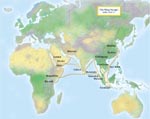
part of the Ming. Usual Itinerary1. They sailed from the shipyard, Baochuanchang (literally, "Treasure-ship Yard") near Nanjing. 2. Then they sailed slowly down the Yangzi river to Liujiajiang (Liu chia chiang) at the mouth of the Taicang (T'ai ts'ang) river (now known as Liu creek), where Zheng He organized his fleet, and where sacrifices were made at the shrine of Tianfei (T'ien-fei), the Celestial Spouse, goddess of the sailors. 3. It took 4-8 weeks to get to Taiping (T'ai-p'ing) anchorage, Changle (Ch'ang-lo) sub-prefecture, near the mouth of the Min River in Fujian province. 4. They waited at Changle for favourable northeast monsoon. Sometimes they had to wait until December-January. After offering prayers there to the gods, they fleet left the China coast. 5. The expeditions lasted two years each. 6. They ordinarily stopped at: Qui Nhon (in Champa) and Surabaja (in Java). 7. In Java they stayed for 4 months until the wind was favourable in July. Then they proceeded to Palembang, Ceylon, and Calicut. 8. Later expeditions went to: Hormuz, Dhufar, La'sa, Aden, and Jidda. Some ships became detached from the main fleet and made visits to: Bengal and to East African ports as far south as Malindi. 9. The expeditions normally returned in March: quick run home by way of Singapore strait, arriving in the Yangzi river region during July. The two years of each voyage followed roughly the same seasonal pattern:
|
The Seven Voyages
|