|
|
|
|
|
The Ming Voyages: The Second Voyage, 1407-1409
Evidence for the Second VoyageThe Order for the Second Voyage
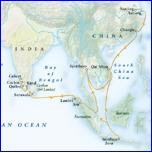
About the Second VoyageImperial Orders for the Expedition: This expedition was ordered by an imperial edict of 13 October, 1407, addressed to three eunuchs: Zheng He, Wang Jinghong, and Hou Xian. Departed: Yongle 5, probably not until January or Feb 1408 Returned: Yongle 7, probably in late summer 1409
Officials on Board: Although Zheng He was officially in command, he was not present on this voyage. He was present at the conferring of honours on the Celestial Spouse (goddess) in China on 21 January, 1408. There was an inscription signed by him and dated 15 February, 1409, which was set up in Ceylon, but this inscription must have been composed in Nanjing at that time, and not set in place until the third voyage. Zheng He's colleagues Wang Jinghong and Hou Xian directed the voyage. The Fleet: There were 249 ships; the number of troops is unknown. Places Visited: Champa, Siam, Java, Aru, Lambri, Coimbatore, Kayal, Cochin, Calicut, and Puttanapur. Highlights: The purpose of this expedition was for Chinese officials to be present at the solemn institution of the new king of Calicut, Mana Vikraman (Mana Biejialaman). It is said that this was for them to "make known the Imperial Will" to the king. The ships stayed in Calicut for four months, probably from December 1408 to April 1409. The commander of the Chinese fleet erected a tablet with an inscription on it at Calicut, commemorating the developing relations between India and China. An ambassador from Siam arrived with the returning fleet in 1409. Tribute: The Changle inscription says, "The kings of these countries all sent as tribute precious objects, precious birds and rare animals". The Chinese emissaries presented brocades and gauzes to the various kings.
|
The Second Voyage
|