|
|
|
|
|
The Ming Voyages: The First Voyage, 1405-1407
Evidence for the First VoyageThe Order for the First Voyage
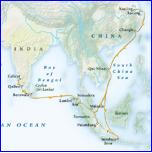
About the First VoyageImperial Orders for the Expedition: In the 3rd month (of the Chinese lunar calendar) of 1405 Emperor Yongle issued a preliminary order for Zheng He and others to take command of the expedition. The Imperial Edict ordering the expedition was dated 11 July, 1405, and was addressed to Zheng He and his colleagues. The construction of 250 ships had been ordered as early as 1403. Departed: Yongle 3 (1405), late autumn or early winter Returned: Yongle 5 (2 October, 1407) Itinerary:
Officials on Board: Zheng He, Wang Jinghong, and others The Fleet: Consisted of 317 ships altogether, including 62 "treasure ships" and 255 smaller ones. Personnel: There were 27,870 people on board, including subaltern officers, soldiers of the flag-army, soldiers, civilians, buyers, and clerks. Places Visited: Champa, Java, Palembang, Semudera, Lambri, Ceylon, Calicut, and probably also Malacca, Aru, and Quilon. Highlights: Ambassadors from Calicut had arrived in China during the 3rd year of Yongle (1405), bringing horses as tribute. They were allowed to import pepper into China free of duty. The principal objective of this voyage was to send a return mission to Calicut. The expedition stayed in Calicut for 4 months, probably from Dec. 1406 to April 1407. Probably on the return voyage, Zheng He's engaged in war against bands of brigands led by the Chinese pirate Chen Zuyi (Ch'en Tsu-i), originally from Guangdong. Chen had been terrorizing the Malaccan strait for some time, and wreaking havoc among the native merchants at Sanfoqi (Sri Vijaya, Palembang). Zheng He's troops demanded Chen's surrender, he refused and planned an ambush, but Chinese soldiers defeated him, killing over 5000 pirates, burning ten of their ships and taking seven others. They captured Chen Zuyi alive, and brought him back to China's capital where he was presented to the emperor and sentenced to decapitation in October 1407. This episode delayed Zheng He in Calicut for three months on his return journey. Foreign Relations: Gifts presented to princes and chiefs of various countries included silk with gold decoration. Foreign envoys: Envoys came to China with Zheng He's fleet from Calicut, Semudera, Quilon, Aru, Malacca, and other countries and brought tribute to the Chinese emperor.
|
The First Voyage
|